How often does one read this or a similar line in a blog?
Almost three blogless months, but they have not been idle. I have found five more Pinto bindings, written an introductory article on researching traces of use and, after uploading a new version of my web-builder, the tracesofuse.eu site of course needed some repairing and maintenance.
Now, ready to roll the blog again, lined up for the next blog entry are juvenile traces of use, found in a copy of Heidi. A textbook case which confirms what H. Jackson writes on the subject in Marginalia: Readers Writing in Books.
16-07-2011

28-04-2011

14-04-2011

13-04-2011
Serendipity?
It seems serendipity struck on 18th November 2010 when, on opening a box at Special Collections, I found this binding.

A quick search on internet revealed the similarity to the coat of arms of the Pinto family, which also has five crescent moons. However, which family member was the bibliophile? The U.v.A description does not give further details. My query on this blog was answered by an Italian reader who enclosed a link to the Italian/Napoletan Pinto's with a coat of arms with the same five crescents. Meanwhile I was thinking in the direction of the most famous Pinto on the internet, being the 68th Grandmaster of the Sovereign Military Order of Saint John Knights of Malta, the Portuguese Manuel Pinto de Fonseca (1681-1773). And indeed it was long thought the armorial bindings were his (Guichard 1890). It wasn't until last week that further clues regarding the provenance came to me through K.G. According to Storm van Leeuwen the bindings are from the book collection of the Portuguese/Jewish Aaron Joseph de Pinto (1710-1758) from Amsterdam.
A lucky find which merits my further research. Back to library and archive.
Serendipity with a birthday feeling.
J. Storm van Leeuwen, Dutch Decorated Bookbinding in the Eighteenth Century. 't Goy/Houten: Hes & De Graaf, 2006. 4 vols.

A quick search on internet revealed the similarity to the coat of arms of the Pinto family, which also has five crescent moons. However, which family member was the bibliophile? The U.v.A description does not give further details. My query on this blog was answered by an Italian reader who enclosed a link to the Italian/Napoletan Pinto's with a coat of arms with the same five crescents. Meanwhile I was thinking in the direction of the most famous Pinto on the internet, being the 68th Grandmaster of the Sovereign Military Order of Saint John Knights of Malta, the Portuguese Manuel Pinto de Fonseca (1681-1773). And indeed it was long thought the armorial bindings were his (Guichard 1890). It wasn't until last week that further clues regarding the provenance came to me through K.G. According to Storm van Leeuwen the bindings are from the book collection of the Portuguese/Jewish Aaron Joseph de Pinto (1710-1758) from Amsterdam.
A lucky find which merits my further research. Back to library and archive.
Serendipity with a birthday feeling.
J. Storm van Leeuwen, Dutch Decorated Bookbinding in the Eighteenth Century. 't Goy/Houten: Hes & De Graaf, 2006. 4 vols.
06-04-2011
Ongoing
inspiration often comes from the unforeseen. At the present I am motivated from several directions. Firstly being asked to write an exposition on the value of provenance for book history. Secondly by an unforeseen flow of interaction with ex-University of Amsterdam book researcher K.G., who has spent the past thirty+ years, among other things, reassembling the library of the bibliophile 16th century Dutch pastor Jacob Buyck. And last but not least by a reader of this blog, omnivore like myself, who through her work in Rabelais.nl, led me to re-examine an insignificant paper on Samuel Kinser's monograph Rabelais's Carnival, written during my Comparative Literature studies, in which Rabelais is not so much the object of discussion, as is Kinser's research method.
26-03-2011
How to trace specific ownership marks and marginalia? How to go about reassembling a long dispersed library? A day of testing several sites with provenance research options left me with ambiguous feelings. It appears that searching online for specific traces of use is not only a time consuming but also a daunting occupation. Unsatisfactory, because provenance records are not always included in descriptions and even then they are not always mentioned in the online entries. I entered the name of the well known bibliophile Marcus Fugger in the C.E.R.L. Thesaurus and got zero result. I find that hard to believe. The thesaurus is linked to a long list of European libraries and zero result would mean none of these libaries have a book formerly owned by Marcus Fugger? Ideally, every book should be checked from front to back for traces of use and a thorough description made of the evidence found, according to standard, searchable entries. A lot of work and not enough librarians to do the job. The ambiguity lies therein that looking for traces of use is a mountain of work and this is a good thing because that mountain covers a wealth of unidentified gems for the lucky finder.
To end on a positive note, the provenance page of the library of Lyon is a feast for the eye. Multi searchable, very complete descriptions and with photographs of relevant details.
To end on a positive note, the provenance page of the library of Lyon is a feast for the eye. Multi searchable, very complete descriptions and with photographs of relevant details.
22-03-2011
11-03-2011
Continuing the ABC
Have reached 'potential pitfalls' and it is time for reflection. My own pitfall number one might be spending too much time on the ABC. Moving it to the Traces of Use site was much more work than I had counted on as the pictures had to be moved as well. And futhermore regularly going back and forth in the list, correcting, adding and deleting. Time well spent, but also a prevailing feeling that this ABC project will never end. Pitfall number two is the looming alienation of this blog. Do I want that to happen? Back to blog, books, and research next week!
06-03-2011
17-02-2011
'Internetless in Burgundy', always makes me think of Eyeless in Gaza. Association of sounds. But, things seem to be getting better, because in all probability this time Burgundy will not be internetless. 10 days of peace and quiet and time to get on with the ABC, if not online, then offline.
As yesterday's comment says: with as much information as possible and RELEVANT. To which I would like to add: with as many photo's as is neccessary to illustrate the material.
As yesterday's comment says: with as much information as possible and RELEVANT. To which I would like to add: with as many photo's as is neccessary to illustrate the material.
13-02-2011
12-02-2011
07-02-2011
When, on waking up in the morning, I find myself blind-typing my thoughts, I know I'm spending too much time behind my computer!
Posted an identification question on the C.E.R.L. platform. (Also in: 'Does anyone know').
Posted an identification question on the C.E.R.L. platform. (Also in: 'Does anyone know').
06-02-2011
29-01-2011
27-01-2011
Back to book business after over a month of activity elsewhere.
Among other things a visit to the Baliem Valley on Indonesian West Papua. I now have an impression of what the Papuans were doing in the 16/17th century as this was probably more or less the same thing they are doing today. Life in the Baliem Valley has hardly evolved since the Stone Age, not even since the valley was discovered in 1938. Of course visiting westerners introduced the obligatory T-shirts and jeans, but these are mere accessories for tribal gear.


Among other things a visit to the Baliem Valley on Indonesian West Papua. I now have an impression of what the Papuans were doing in the 16/17th century as this was probably more or less the same thing they are doing today. Life in the Baliem Valley has hardly evolved since the Stone Age, not even since the valley was discovered in 1938. Of course visiting westerners introduced the obligatory T-shirts and jeans, but these are mere accessories for tribal gear.

A visit to a remote mountain valley without books or signposts, where schoolteacher Simson wears his tribal headset with snazzy sweat shorts and teaches his pupils elementary stuff about the world beyond. A world one day's walk and forty-five minutes by airplane from their village, a world they might never visit.
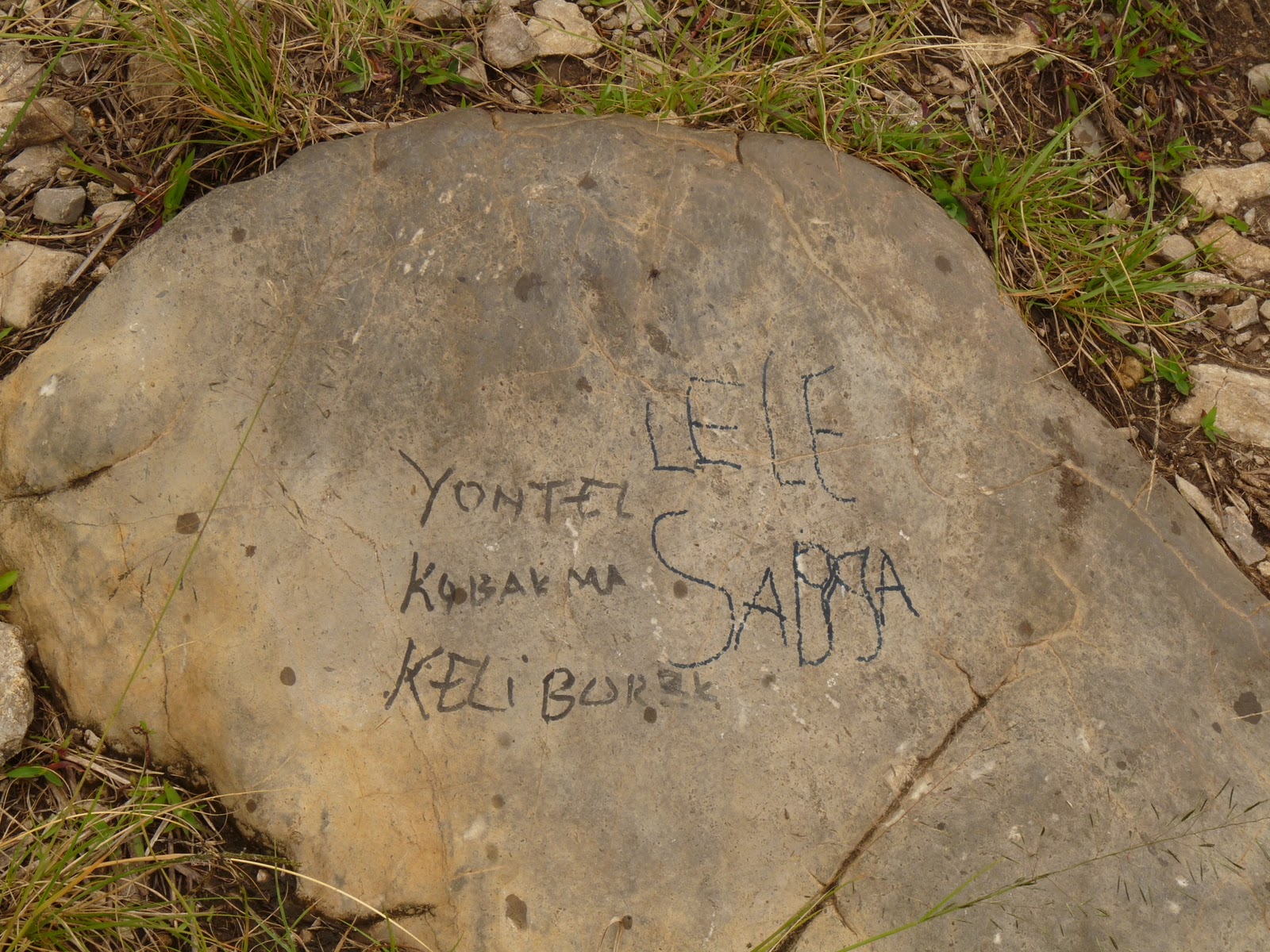
A valley where tourists leave marginalia on rocks.

17-12-2010
Quest
Worthwhile trek on foot through Amsterdam blizzard to obtain two articles on provenance research by Goran Proot and Steven van Impe, both of which turn out to be very useful for futher development of my provenance research.
Steven van Impe, 'Pronto: een ontologie voor het onderzoek van herkomstmerken'. In: Jaarboek voor Nederlandse boekgeschiedenis. 2008. Nijmegen/Leiden: Uitgeverij Vantilt/NBV.
Goran Proot, 'Gebruikssporen in programmaboekjes voor het collegetoneel van de jesuïten in de Provincia Flandro-Belgica (1575-1773). In: Jaarboek voor Nederlandse boekgeschiedenis. 2008. Nijmegen/Leiden: Uitgeverij Vantilt/NBV.


Lion sitting on top of the gable of a seventeenth century warehouse on the Brouwersgracht, Amsterdam, built in the same period as the Lyon research corpus. The kinglike lion wears a golden crown, an element that features in many 16/17/18th century coats of arms, as on the binding of D'Este's Consolaçam Christaã above. This lion and a companion lamb were pulled out of a disposal container during restoration activities in the ignorant 1970's by two resourceful ladies Dea and Han, and replaced where they had belonged for many centuries.
Steven van Impe, 'Pronto: een ontologie voor het onderzoek van herkomstmerken'. In: Jaarboek voor Nederlandse boekgeschiedenis. 2008. Nijmegen/Leiden: Uitgeverij Vantilt/NBV.
Goran Proot, 'Gebruikssporen in programmaboekjes voor het collegetoneel van de jesuïten in de Provincia Flandro-Belgica (1575-1773). In: Jaarboek voor Nederlandse boekgeschiedenis. 2008. Nijmegen/Leiden: Uitgeverij Vantilt/NBV.
Lion sitting on top of the gable of a seventeenth century warehouse on the Brouwersgracht, Amsterdam, built in the same period as the Lyon research corpus. The kinglike lion wears a golden crown, an element that features in many 16/17/18th century coats of arms, as on the binding of D'Este's Consolaçam Christaã above. This lion and a companion lamb were pulled out of a disposal container during restoration activities in the ignorant 1970's by two resourceful ladies Dea and Han, and replaced where they had belonged for many centuries.


21-11-2010
S.P.R. in L. continued: revaluation
A very inspiring day with presentations concerning the development of databases of ownership marks and other traces of use, by representatives of the Staatsbibliothek zu Berlin, the Uppsala University Library and the Consortium of European Research Libraries. A most important undertaking which unfortunately is still very much a home country affair. There are however plans for international collaboration, which would hugely benefit provenance research. Some interesting case studies and a lecture by David Pearson, which had drawn me to the symposium in the first place. Prime provenance researcher, with an open attitude to innovation and to the range of the possiblities of research of traces of use; I felt reassured about my doubts about interpretation of (greek) annotations and went home eager to revalue my findings up until now.
The symposium was a joint initiative of the Leiden University Library and the Scaliger Insitute, also in Leiden. It seems the lectures will be made available on the site of the latter.
19-11-2010
18-11-2010
So many questions
Time goes by. Sometimes screening a pile of books a day. Some days just staring at the pictures on my computer. Wondering about the importance of detail, as when studying comparative literature, where every sentence could unveil a clue.
The Lisbon books do not disappoint. They appeal to me because I can read them. I can read the preliminary leaves in which the role of the inquisition and religion is illustrated beyond any doubt. I can feel the age in which they were written and published. If I were only looking for traces of use I would be disappointed: hardly any traces of use in the traditional sense. Does that matter? Researchers hope to find traces of use that will modify perception. Maybe it is also comforting to leaf through a book that clearly has been read, but has no annotations to prove it. Not a pristine copy, but thumbed pages.
And yet...
To remove the unasuming protective box and to find this on a binding is a thrill.

The Lisbon books do not disappoint. They appeal to me because I can read them. I can read the preliminary leaves in which the role of the inquisition and religion is illustrated beyond any doubt. I can feel the age in which they were written and published. If I were only looking for traces of use I would be disappointed: hardly any traces of use in the traditional sense. Does that matter? Researchers hope to find traces of use that will modify perception. Maybe it is also comforting to leaf through a book that clearly has been read, but has no annotations to prove it. Not a pristine copy, but thumbed pages.
And yet...
To remove the unasuming protective box and to find this on a binding is a thrill.
Diego de Mendoça, Guerra de Granada.
En Lisboa: Por Giraldo de la Viña. Año 1627.
U.v.A. call number OTM: O 63-6465
Abonneren op:
Posts (Atom)